

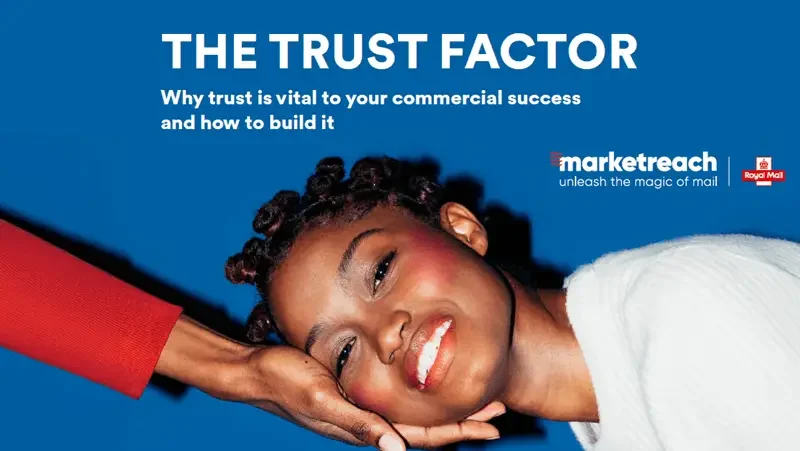
Foundational research on trust, business success and channel selection.
According to Salsify approximately 81% of consumers consider brand trust a deciding factor in their purchasing decisions. These consumers are 87% more likely to spend more with brands they trust.
Marketreach is a really valuable and foundational piece of research around trust between brands and consumers. Trust is key to successful business and relationships and it’s both incredibly hard to earn and equally easy to lose. This excellent research from Marketreach defines the commercial impact of trust and gives you insight and an online tool to get and idea how you can build trust in your organisation and through your marketing channels. Highly recommended. Basic details required.
All Levels.
Full original article with all the insight over at Marketreach (quick data-gathering form)
ok, we know you’re rammed. Here’s a quick lowdown…
The Trust Factor: Why It Matters and How to Actually Build It
Let’s start with the obvious: without trust, there’s no relationship.
Not between people. Not between brands and customers. Not in business, politics, media, or anywhere else.
But trust isn’t as simple as being “trusted” or “not trusted.” It’s layered, built over time, and easily broken. And when it breaks, your brand pays for it. Literally.
Marketreach’s research shows that trust isn’t just a “nice to have”, it’s a measurable business asset. The more your audience trusts you, the less you need to spend convincing them to act. Lose that trust, and you’ll find yourself in what they call the Trust Deficit where every sale, lead, or click costs more.
What Is Trust (Really)?
Trust is built through experience; how people feel, what they see, and whether you deliver. It isn’t just logical. It’s emotional.
Marketreach identified four key themes that define trust in any relationship:
- Relationships: Trust only exists between two parties, people and brands or organisations.
- Information: Every experience adds data points that shape future decisions.
- Belief: Trust depends on emotion as much as fact.
- Vulnerability: Trust means risk, and when people feel safe enough to take that risk, you’ve won.
How to Measure Trust (and Prove It’s Worth Money)
They used Structural Equation Modelling (SEM) to find out how trust links to customer behaviour.
The takeaway?
- Trust directly drives 13% of customer consideration (i.e. the chance they’ll choose you).
- When people trust a brand, 74% take commercially valuable actions like buying more, spending more, recommending you, or forgiving mistakes.
In other words, trust pays for itself.
The Eight Pillars of Trust
Trust isn’t one thing, it’s eight.
Every brand relationship is built on these core pillars:
- Reliability – Do you do what you say you’ll do
- Reciprocity – Do people feel trusted in return?
- Aligned Interests – Do customers believe you’re on their side?
- Stake – Do both sides have something to lose?
- Familiarity – Do people recognise and understand you?
- Fame – Are you endorsed or talked about positively?
- Frequency of Communication – Do you show up often enough to stay relevant?
- Tenure – How long has the relationship lasted?
If one of these cracks, your brand’s credibility wobbles.
Trust Is Built Through Experience
Trust isn’t won in a single campaign, it’s earned through consistent delivery and positive experiences.
Every interaction either strengthens or weakens it.
In their words:
“Good experiences build trust. Bad experiences destroy it.”
So yes, great service matters. But so does how often you show up, how transparent you are and how you communicate when things go wrong.
The Communications Formula
When it comes to building trust, not all marketing messages are created equal.
Marketreach broke it down into three parts:
- Messenger (50%) – Who’s speaking? The brand itself.
- Medium (42%) – Where are you saying it? The channel matters.
- Message (8%) – What are you saying?
In short: who says it and where they say it matters more than what they say.
A great ad won’t fix a brand people don’t trust.
The Media That Builds Trust… direct mail
Here’s the part marketers will want to screenshot:
Direct mail is the single most trusted marketing channel — more trusted than TV, radio, social, email, or online ads.
Why?
- It feels personal and tangible.
- It’s perceived as secure (harder to fake).
- It gives people time: there’s no pressure to respond instantly.
- It’s seen as authentic, because it takes effort and cost to send.
And importantly, it drives results:
- Direct mail builds reliability, familiarity, and fame, which are three of the biggest drivers of trust.
- It increases the chance a customer will consider you by 3%.
That may sound small, but when trust already drives 13% of overall consideration, it’s a direct commercial lift.
What Happens When Trust Breaks
When customers stop trusting a brand, they don’t just get annoyed — they disappear.
60% of people who stop using a brand say it’s because they no longer trust it.
The biggest causes of lost trust:
- Poor customer service
- Bad value for money
- Low quality
- Failure to take responsibility
- Inconsistent messaging
- Over-communication (spammy behaviour)
- Ethics and transparency issues
Once trust breaks, brands enter the Trust Deficit where acquiring or retaining customers costs more because belief is gone.
The good news? You can rebuild it.
Acknowledge mistakes, communicate honestly, and fix what broke. Done right, repaired trust can actually come back stronger.
Measuring and Managing Trust
Marketreach created a practical tool – The Trust Explorer – to help brands measure where they stand and identify which trust pillars need work.
It tells you:
- Your baseline trust level
- Which pillars to strengthen
- Which media channels will best build that trust
It’s not a planning tool it’s a trust strategy engine for brands to grow loyalty and purchase value when executed as part of a coherent brand experience camapign.
The Bottom Line With trust
Here’s the real takeaway:
- Trust isn’t a feeling — it’s a measurable business advantage.
- It’s built through reliability, reciprocity, aligned values, and consistent communication.
- Direct mail stands out as the most credible, personal and powerful trust-building channel.
- When trust drops, everything gets more expensive — acquisition, retention, loyalty.
- Rebuild it, and you gain not just forgiveness, but advocacy.
Trust is slow to earn and fast to lose — but it’s the most valuable currency your brand owns.
Want more? Check out all Carefully Curated Content here.
Oops! We could not locate your form.