

How AI-driven search changes content strategy (and what to do about it)

AI-driven search is changing content strategy because people increasingly get an answer before they reach your website. That means your content needs to be easy to summarise accurately: clear definitions, specific details, consistent service information, and an obvious next step for readers who want to act.
This article over on the Wordstream blog explains what to change in your content (and content structure) so your business is described clearly for AI citations.
Intermediate Level. 20 minute read.
The original article over on the Wordstream Blog is really worth a read
but I want a quick summary…
OK, if you insist (ours is skimmable but the Wordstream version is more comprehensive and a better (human!) read.
How AI-driven search changes content strategy (and what to do about it)
Content still influences buyers. What has changed is where the understanding gets built. Explanations are reused and summarised by AI, and several related questions get merged into one answer. So now, people often meet an AI version of your business before they ever reach your website.
Shift 1: Opinion-led thought leadership gets reused less
Perspective still helps once someone is on your site. But AI Systems pull the clearest, least ambiguous parts of the web to build a single answer, so content that leads with critique or a bold claim is harder to reuse.
- Lead with definitions and plain language first.
- Make scope clear: what the service is and is not.
- Add conditions and specifics (numbers, thresholds, timelines) first, then layer in your viewpoint later.
How do you keep your point of view without losing clarity?
Separate the two jobs. Put the neutral explanation up top, then add your stance underneath with examples from real scenarios. If your viewpoint relies on context, state that context explicitly so it still makes sense when summarised.
Shift 2: One page per keyword intent breaks down
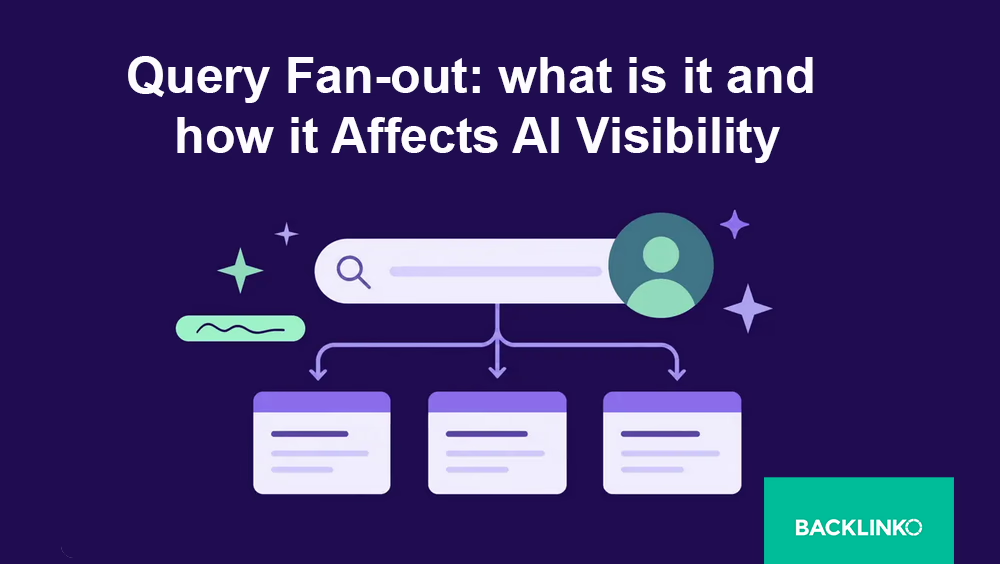
Old SEO often split content into separate pages: definition, pricing, comparisons, tradeoffs. AI-driven answers pull those together in one go. When your context is scattered across five thin URLs, the combined summary can flatten the details that make you different.
Now, the safer pattern is a decision page that holds the full story in one place, without turning into a massive essay.
- Explain what it is, who it is for, and what affects cost.
- Include timelines, tradeoffs, and alternatives.
- Bring common objections into the main flow, not a buried FAQ.
Should you merge content into one long page or keep separate pages?
Keep separate pages when the topic genuinely needs its own space, but make sure your main revenue page can stand alone. A buyer (or an AI) should be able to understand the offer without needing to click four supporting articles to fill the gaps.
Shift 3: Your website becomes a validation step, not the start
People arrive with a baseline summary in their head: what it is, rough pricing, comparisons, and tradeoffs. When your site matches that framing, trust builds faster. When it clashes, you spend time correcting assumptions you did not create.
This makes the first section of your key service pages disproportionately important.
- Restate the service clearly at the top.
- Define scope immediately and make exclusions obvious.
- Use realistic pricing language and explain what drives variation.
- Cover edge cases buyers ask about before sales calls happen.
What should the first 200 words of a service page include?
A plain definition, who it is for, who it is not for, and the main factors that change price or outcomes. Aim for a buyer-ready summary that reduces back-and-forth, not a marketing intro.
How these shifts compound
When opinion-heavy content gets skipped, intent is split across multiple URLs, and the first explanation happens upstream, you lose control of how your business is described. That shows up as misaligned leads, price objections based on generic averages, and enquiries that do not fit your speciality.
A quick content audit you can run this week
- Does your main service page explain the offer plainly at the top?
- Are fit criteria and exclusions visible, not hidden?
- Are cost drivers explained in context, not isolated on a thin pricing page?
- Are common objections handled in the main narrative?
- If someone only read the first section, would they describe you correctly?