

The three types of video that engage the most
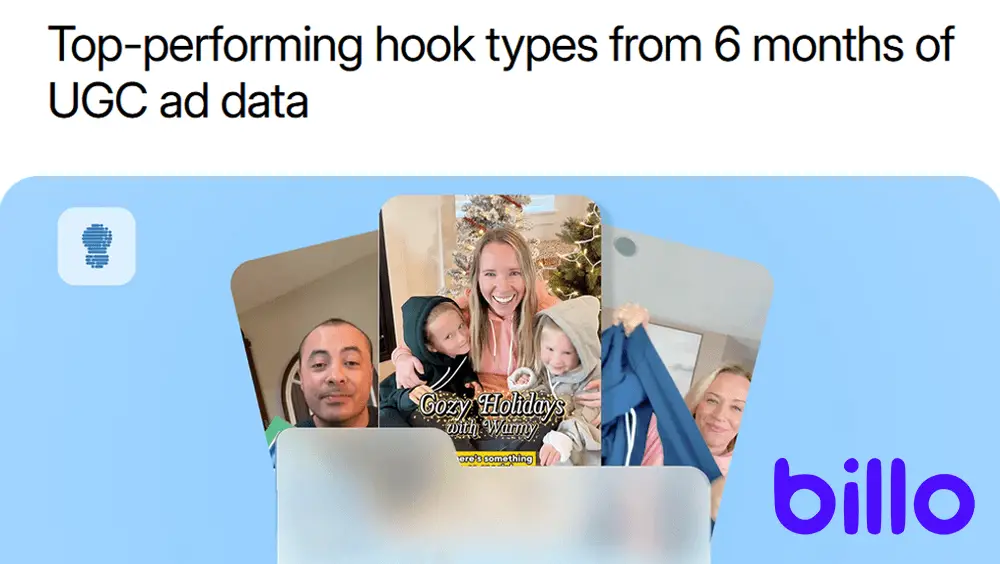
Here’s some essential insight from creator ad platform, billo, into the 3 types of video that engage the most. Their analysis uncovers video hooks that stop scrollers in their tracks – and is super-transferrable insight to use across your other video creations.
Have a gander at the original article over on the billo website
But as usual, if you don’t have the time right now, here’s a summary – made as skimmable and easy-to-digest as we can strong-arm ChatGPT into making it.
What six months of UGC ad data says about better video hooks
Billo’s review of six months of User Generated Content (UGC) ad performance found that the strongest openings usually felt real, specific or naturally funny. The lesson for marketers is simple: give creators a human moment worth watching before asking them to sell (and before asking users to buy).
The three strongest hook types
The best-performing hooks clustered around three formats:
- Authentic moments: real reactions, problems or situations.
- Audience call-outs: openings that name a specific viewer, role or problem.
- Humour: natural, awkward or playful moments that lower the viewer’s guard.
Authentic hooks work because they feel less scripted
Authentic moment hooks performed strongest. These openings feel caught rather than manufactured: a reaction, a frustration, an unboxing, or a small real-life problem. The product comes in after the viewer has a reason to care.
What makes a UGC hook feel authentic?
Start with a believable situation, not a sales claim. Show surprise, relief, annoyance or curiosity before introducing the product. If the creator sounds like they are reciting a positioning line, it will probably feel like an ad too soon.
Audience call-outs work when they are specific
Strong call-outs make the right person feel recognised quickly. The best versions speak to a viewer’s role, situation, relationship or problem before moving into the product.
- Weak: This product is amazing.
- Better: If your mornings are chaos, this is for you.
Humour helps when it feels natural
Funny hooks worked well when they came from the creator’s own style. Forced jokes are risky. A naturally awkward, playful or surprising moment can stop the scroll because it feels more like content than a pitch.
How should brands brief creators to use humour?
Brief the situation, not the joke. Give creators the product, audience, problem and any must-say points, then let them find the funny angle in their own voice. If the joke needs committee approval, it is probably already in trouble.
Authority hooks need visible proof
Authority worked best when credibility was obvious on screen. A dentist in a clinic, a chef in a kitchen or a specialist using proper equipment is stronger than someone simply saying they are an expert.
Some strong hooks used no voiceover
Not every hook needs talking. Visual-first openings can work when the product has a clear payoff: an unboxing, transformation, before-and-after, or satisfying demo. In a feed full of talking heads, silence can be useful.
Why do common hook templates stop working?
Templates lose power when people have seen them too often. Vague urgency, secret reveals and list-style openings can feel pre-packaged. A better test: does the first two seconds sound like a real person with a real reason to speak?
What marketers should do next
- Test authentic moment, audience call-out and humour hooks first.
- Give creators a clear brief, not a word-for-word script.
- Use visual proof for authority-led hooks.
- Try silent or demo-led openings for products with strong visual impact.
- Judge the first two seconds by whether they feel human, not polished.
The practical takeaway: the best UGC hooks do not open like adverts. They open like something worth pausing for.