

Direct Mail, Door Drops & Business Mail Effectiveness Reach a 5 Year High
As of now, Direct Mail as a channel is is boasting a 96% engagement rate, with 84% of consumers reading their mail immediately on the same day of receiving it. Insane number for marketing effectiveness aficionados .
If you’re looking for ways to drive key digital actions with your customers, the latest independent JICMAIL data for media planners shows mail’s delivering close to lockdown levels of engagement. That 5 year high covers all mail types: direct mail, door drops and business mail.
Intermediate Level.
Here’s the full original article over on JICMAIL.ORG.UK
No time? Here’s a quick precisE OVerview of the Findings
Key Findings on Direct Mail Response
- Interaction rates for direct mail, door‑drops and business mail have hit their highest levels in five years – the channel is proving its strength again.
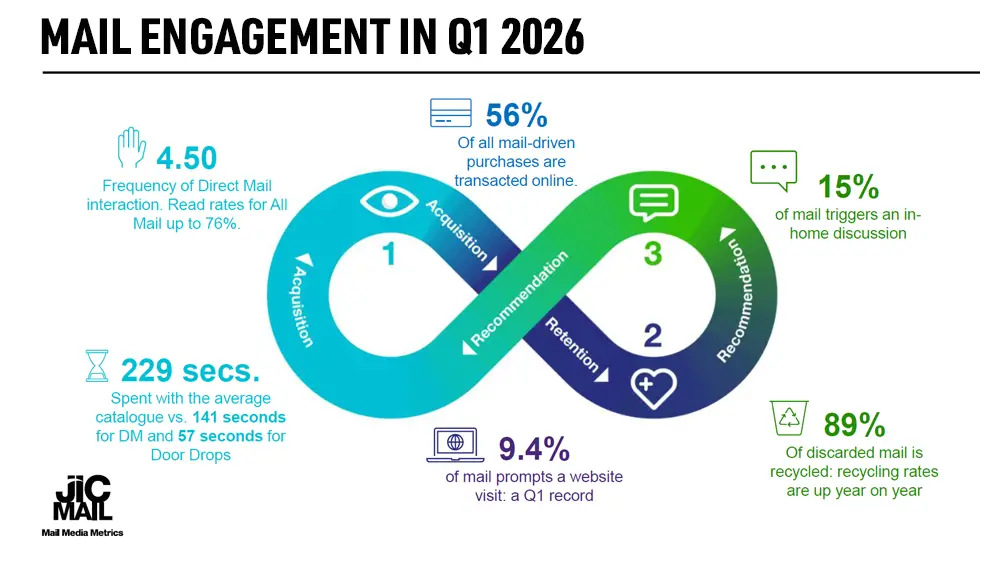
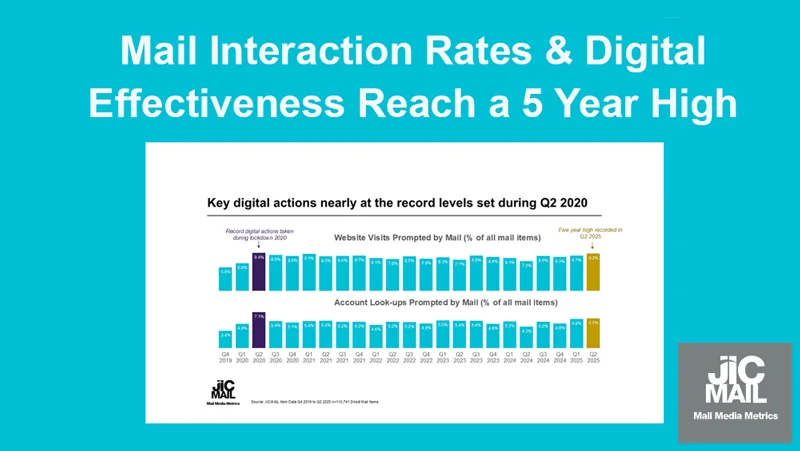
- 9.2 % of mail items prompted a visit to an advertiser’s website: edging close to the all‑time high of 9.4 %.
- 5.9 % of mail prompted a consumer to look up account details via digital channels: also a five‑year peak. - Mail is now acting powerfully as a gateway: for example, 8% of mail items that prompted an account look‑up also resulted in an app download.
- On purchase behaviour: mail‑driven purchases rose by 15 % year‑on‑year, with around half of those completed online. Voucher redemptions and large‑purchase planning tied to mail both increased.
Media & Attention Metrics
- For direct mail, average interactions per item stood at 4.56: near 2020 levels.
- Time spent engaging with mail is rising: the average engagement time increased by 13 seconds year‑on‑year.
- For door‑drops the typical attention time is now around one minute; for business mail about 186 seconds.
- Volume growth: door‑drops + direct mail volumes grew by 4 % year‑on‑year in the first half of 2025.
What This Means for Marketers
- Mail isn’t fading in the era of digital: it remains a high‑attention, high‑impact channel that bridges physical and digital.
- Because mail triggers digital behaviours (website visits, account look‑ups, app downloads), it’s better positioned as part of an integrated media strategy rather than a standalone tactic.
- If your media plan is heavy on digital but suffering from low attention or engagement, mail offers a meaningful “handover” point – driving users into digital activation.
- Given the elevated metrics, reinvesting or re‑optimising mail in the mix could provide outsized returns – especially where attention and multi‑channel synergy matter.
Takeaway
- When attention is scarce and competition for digital eyeballs is intense, the physical mail channel continues to punch above its weight.
- Use mail not just for traditional direct response, but as a bridge to digital moments (website visits, account access, mobile app downloads).
- Focus on measuring the handover effects: mail to digital behaviour. That’s where the incremental value is being found.
- Don’t treat mail in isolation – integrate it with your overall media strategy so that each mail piece becomes a connector into other brand or direct‑response channels.